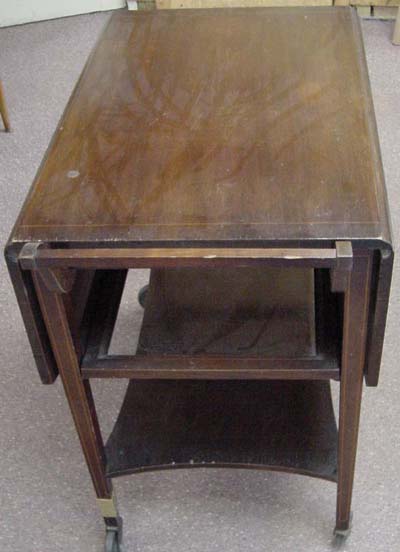
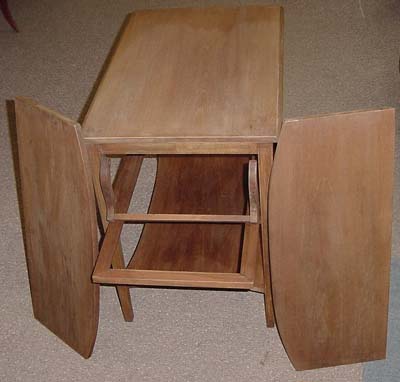
A.H.M. Furniture Repair's
Stripping Only
Service
What is the best way to strip furniture?
Answer: Hire a
professional refinisher to do it for you.
There is no good reason for you to attempt chemical wood stripping
unless you enjoy doing it. Our Stripping Only service is more economical
than people usually guess, often just a little more than you would spend
for the material you'll need to do it yourself. The professional systems
that we use will get the wood much cleaner than what common home stripping
method will achieve. Doing it yourself doesn't even save you very much
money when you consider the cost of buying your own stripper, gloves,
brushes, scrapers, etc.
Stripper fumes can be dangerous without proper ventilation. If you
do it indoors, fumes will get into your heating system and can cause
serious damage when they mix with combustion air. A corrosive gas is the
result which can ruin your furnace. Non-methlyene chloride, so-called safe
strippers avoid some of the problem but guess what? They don't work very
well! If they did, refinishers would be using them en masse. They are not.
As an added bonus we can help you evaluate your project
just as we do on refinishing project proposals. All stripping projects are
inspected for possible needed repairs. We will quote a price to do those
repairs if you wish, but in any case, we believe it is necessary to point
them out to you before we start.
We use different methods for stripping various pieces that are
necessary to handle the wide range of challenging situations. Our strategy
is to apply the most efficient method of stripping that does not risk
damage to the item. The stripping chemical we use is one of the finest
products on the market and is available to professionals only. It will not
burn or cause grain raising of the wood, and evaporates so the wood
doesn't have to be "washed" with water to remove residue. We
almost always use a brush-on stripper where we will have the most control
over exposing the item to chemicals. This is often described by
others as "by hand" stripping method but this is best way
to get to know the piece being stripped to ensure that every detail gets
seen, and there is no loss of integrity in the glue joints. This provides
for a more through repair and refinishing job.
To remove paint requires the item stay wet with chemical longer. For
painted items that can handle a period of soaking, the tank method is most
efficient. We generally do this with only small items that don't have a
lot joinery. Larger items are coated with stripper and wrapped to stop
evaporation and allow the stripper to do its work overnight.
If you are going to do your own stripping, please
consider the following.
1. Get your chemical and other supplies from a paint store where
you can get knowledgeable service. Don't be suckered by TV infomercials!
Believe me, there are no stripping chemicals available that are
significantly different or stronger than those that you'll find right
down the street at the paint store!
2. The larger variable with any given stripping project is the
existing paint or finish on the furniture. If you're having problems
stripping, it's probably not because you're using the "wrong"
stripper. The problem is what you are stripping, or how you are
stripping, and usually not what brand of stripper you are using. Think
about what you're going to spend on material vs. what we'd charge you to
strip it. Is it really worth it? How confident are you that you'll be
successful? Almost every month we'll have a stripping project to do for
someone who started it themselves and gave up.
|